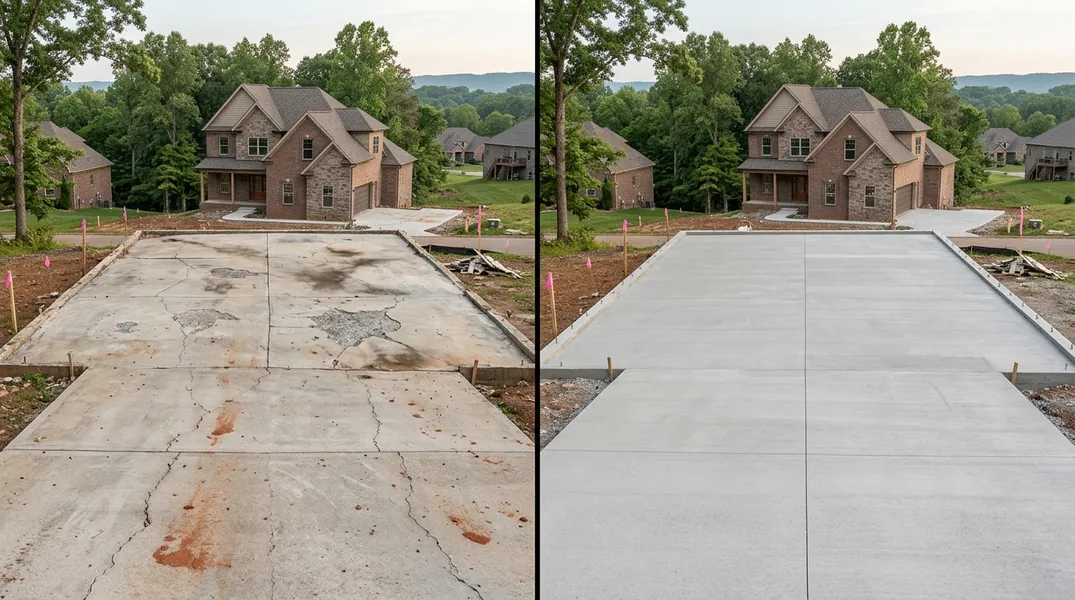
Understanding New Construction Slabs in Knoxville
Buying a new construction home in Knoxville is exciting, but many homebuyers overlook one of the most critical components of their investment: the foundation slab. Unlike older homes where you might have a basement or crawl space, most new construction in the Knoxville area uses a slab-on-grade foundation. This concrete slab sits directly on the soil and serves as the base for your entire home. Understanding what you're looking at during a final walkthrough can save you from costly repairs down the road.
A new construction concrete slab in Knoxville TN is typically four to six inches thick and is poured over a prepared base layer. The quality of this slab depends on several factors: the soil preparation, the concrete mix design, proper curing time, and the builder's attention to detail. Because Knoxville sits in a region with clay-heavy soils, foundation performance is especially important. Clay expands and contracts with moisture changes, which can put stress on your slab if it wasn't properly prepared.
Why Clay Soil Matters for Your New Home Slab
East Tennessee's geology presents unique challenges for concrete foundations. The native soil in Knoxville and surrounding areas contains significant clay content, which behaves very differently from sandy or well-draining soils. Clay is expansive, meaning it swells when wet and shrinks when dry. This movement, even if slight, can cause your foundation slab to crack, settle unevenly, or develop structural issues over time if the builder didn't account for it properly during construction.
A reputable builder will address this challenge by installing a proper moisture barrier beneath the slab, compacting the soil to the right specifications, and sometimes adding a layer of gravel or sand to improve drainage. When you're inspecting a new home slab on clay, look for signs that these steps were taken seriously. Ask your builder about their soil preparation process and whether they used a geotechnical engineer to evaluate the site. These questions aren't just technical details; they're investments in your home's long-term stability and your peace of mind as a homeowner.
What to Look for During Your Builder Foundation Inspection
A builder foundation inspection should happen before you close on your new home. This is your opportunity to walk the slab with a trained eye and catch any issues while the builder is still responsible. Start by looking at the overall surface. The slab should be relatively level, though minor slopes for drainage are normal. Walk across different areas of the slab and look for visible cracks, especially large ones (wider than 1/8 inch) or cracks that seem to follow a pattern. Small hairline cracks are common in new concrete as it cures, but wider cracks or ones that appear to be growing could indicate a problem with the base preparation or concrete quality.
Check for any areas where the slab appears to be settling or where you notice the floor inside the home feels uneven. Look at the perimeter where the slab meets the foundation stem wall. There should be a clean, consistent line. If you see gaps, separations, or signs of water damage or staining, these are red flags worth discussing with your builder. Also examine how the slab transitions into any attached structures like a garage or porch. These transitions are common weak points where differential settling or cracking can occur. Take photos and notes of anything that concerns you, and don't hesitate to ask your builder's representative to explain their construction methods and quality control procedures.
Common Slab Issues and What They Mean for Your Home
Even with proper construction, new concrete slabs can develop issues that range from cosmetic to structural. One of the most common problems is cracking due to shrinkage as the concrete cures. These are usually not serious, but wider cracks or ones that continue to grow after the first year warrant professional evaluation. Another issue is spalling, where the surface of the concrete chips or flakes away. This is often caused by freeze-thaw cycles, de-icing salts, or poor finishing during construction. While spalling is typically cosmetic, it can eventually allow water to penetrate deeper into the slab.
More serious issues include settlement cracks that form in a stair-step pattern, often indicating that the soil beneath the slab is compacting unevenly or that the base preparation was inadequate. You might also encounter issues with moisture coming up through the slab, which can damage flooring and create mold risks. If you notice any of these problems during your walkthrough or shortly after closing, document them carefully and contact your builder immediately. Many builders offer a warranty period during which they'll address defects. If problems develop after the warranty expires and you need professional assessment or repair, Concrete Repair & Resurfacing specialists can evaluate the damage and recommend solutions.
Questions to Ask Your Builder Before Closing
Don't wait until closing day to ask important questions about your new home's foundation. Schedule a pre-closing walkthrough specifically to discuss the slab with your builder's representative. Ask about the concrete mix design, the thickness of the slab, and whether it meets or exceeds local building codes. Ask about the base preparation process and how they addressed drainage and soil stability. Request information about any warranties that cover the foundation and for how long. A good builder will have detailed answers and documentation to support their claims.
Also ask whether they performed any soil testing before construction began and whether they hired a structural engineer to oversee foundation work. Ask about the curing time they allowed before framing and whether the slab was sealed or treated with any protective coating. Find out what you should do to maintain the slab and protect it from damage. Finally, ask about their process for addressing any cracks or defects that appear. Understanding these details gives you confidence in your investment and helps you know what to expect as your new home settles into its first year. If you have concerns after closing or notice issues developing, the team at Knoxville Concrete Pros is available to provide a professional assessment and discuss your options.
Protecting Your Investment After Closing
Once you've closed on your new home, your responsibility for maintaining the slab begins. The first year is critical because concrete continues to cure and may develop hairline cracks as it does. Avoid heavy loads or impacts on the slab during this time, and be mindful of moisture. Keep gutters and downspouts functioning properly so water drains away from the foundation. If you notice cracks or other issues developing, photograph them and monitor their progress. Small cracks that remain stable and don't grow are usually not a concern, but ones that widen or multiply should be evaluated by a professional.
Consider sealing your slab if the builder didn't already do so. A quality sealer protects concrete from moisture infiltration, freeze-thaw damage, and staining. It also makes the slab easier to clean and maintain. If you're planning outdoor improvements like Concrete Patios, Concrete Driveways, or other concrete features around your new home, work with experienced professionals who understand the local soil and climate conditions. When you're ready to discuss foundation concerns or explore concrete solutions for your new home, contact Knoxville Concrete Pros at (865) 622-4794 or request a free estimate online. We serve Knoxville and the surrounding areas with expert concrete services and advice.
Looking for a professional concrete contractor in Knoxville? Knoxville Concrete Pros responds fast for all your concrete needs.
Get a Free QuoteOur services: Concrete Driveways · Concrete Patios · Stamped & Decorative Concrete